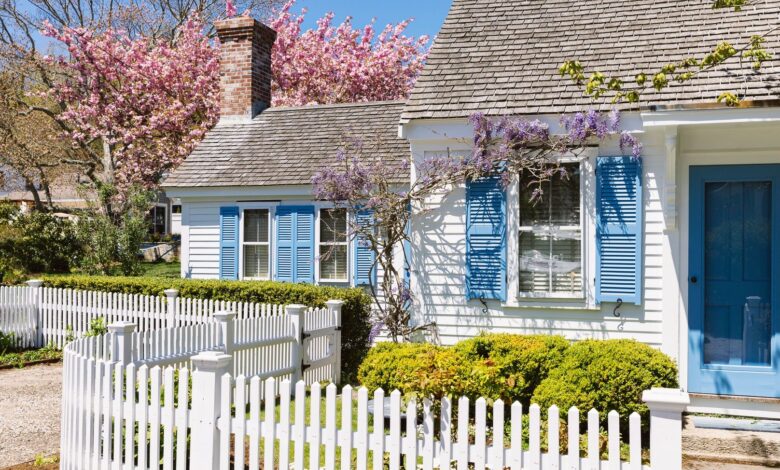
A welcoming, well-landscaped front yard is universally appealing, and it could even help you sell your home. But is it possible to achieve such a look in a low-maintenance manner? According to experts, the answer is yes. Here are five front yard landscaping ideas to improve your home’s curb appeal.
Meet the experts:
-
Loren Taylor, landscaping and gardening expert and owner of Outdoor Fountain Pros
-
Josh Heston, co-owner of Denver, Colorado-based ALC Property Maintenance
-
Taylor Lucyk, Realtor with Christie’s International Real Estate Group and team lead at The Taylor Lucyk Group
If you want to work with what you have: Lay down some mulch.
“Mulch is an easy way to make your yard look neat and also helps with weed control and water retention,” Taylor says. “A fresh layer of bark or wood chips once a year is usually enough to keep the beds tidy and the soil in good shape.” You can even pair dark mulch with lighter stones along a walkway for welcome contrast, he adds.
When determining how much mulch you need, Taylor recommends following this formula: Square feet × desired depth (in inches) ÷ 324 = cubic yards. For example, he explains, a 200 square-foot bed covered to three inches needs just under two cubic yards of mulch—though ordering a little extra is always wise!
If you need an upgrade in a hurry: Opt for container plants.
“Self-watering pots filled with easy plants like petunias, geraniums, or lavender can make the entrance feel more welcoming without much work,” Taylor suggests. “You can also use evergreen shrubs in larger pots to give structure year-round.” Another option? “Hanging window boxes with seasonal flowers adds a cheerful touch and is simple to swap out as the weather changes.”
If you only want to plant once: Say yes to perennials.
If you’re thinking about adding some blooms, perennials are a time- and money-saving option for you and your potential buyer, according to Lucyk. Unlike with annuals, which “grow, bloom, and die within one season and need to be replanted each year,” perennials come back year after year and only need basic maintenance.
Lucyk’s top perennial pick? “Hydrangeas are especially appealing because of their lush blooms and ability to enhance curb appeal,” Lucyk says. “They offer a beautiful, long-term solution for landscaping without the need for constant replanting, making them both appealing and cost-effective over time.”
If you want an environmentally-friendly option: Go native.
Native and drought-tolerant varieties “require less water, fewer chemicals, and little attention once established,” Taylor says. “The key is to group plants that like the same amount of sun and water, so you do not have to manage each area differently,” he adds.
Taylor recommends consulting the Lady Bird Johnson Wildflower Center database to best match plants to your climate. “Choose a state, then narrow by sun, soil, and water needs, and you get a printable list of truly local species,” he says. Alternately, he says, “the USDA PLANTS database is broader and lets you filter for native status and drought tolerance.”
If you don’t mind an upfront investment for a big impact: Consider hardscaping.
“Unlike lawns, which need to be watered, mowed, and fertilized regularly, [hardscaping] requires much less effort to keep looking good,” says Heston. And Taylor agrees: “Gravel paths, stone walkways, and patios not only cut down on mowing but also help reduce water usage.”
The realtor.com® editorial team highlights a curated selection of product recommendations for your consideration; clicking a link to the retailer that sells the product may earn us a commission.