He Lost 80 Pounds and Reversed His Pre-Diabetes. These 3 Tips Helped Him Do It.

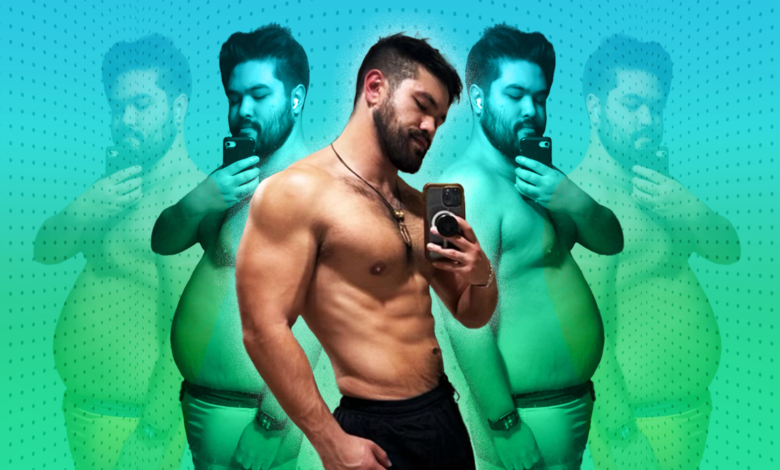
Like many, 28-year-old Josh Spontak lost himself in the pandemic. He was laid off, void of social interaction, and had to move back in with his parents. He was in a dreaded downward spiral that consisted of junk food and a dangerous amount of caffeine to keep himself awake for all-night video game sessions. A family trip forced him out of the house, and after a few weeks abroad, he began to find himself again. It sparked a healthy life—and helped him lose over 80 pounds along the way. In his own words, he explains what he did to make it happen.
I GREW UP an athlete, playing football and soccer since I was three years old. At sixteen I was on track to become a D1 athlete. I felt I was charismatic, fit, and social. But, like for so many, the COVID lockdown prompted a downward spiral in a surprisingly short period of time.
As a socially extroverted person suddenly laid off from work and attending online classes, I quickly became devoid of what brings me energy—connecting with people. Within six months, I dropped out of my last semester of university, moved in with my parents, and gained a ton of weight.
In order to not continue gaining unwanted weight, I developed bulimia. In denial during the next two years, I ignored my body’s warning signs that my lifestyle choices were going to kill me. I was ashamed of who I had become, feeling a need to hide from others, as well as myself.
I felt undeserving to live, and the guilt led to a vicious spiral of self-destructive behavior. My conscience warning me of my chosen path was drowned out by short-term highs induced by marijuana, alcohol, and video games. I had so many unhealthy addictions, numbing the pain with endless hours playing Apex Legends.
A routine physical exam revealed that I was already pre-diabetic and predisposed to hypothyroidism with low testosterone levels. I relied on caffeine to get me through nights of playing video games, and my slow metabolism coupled with low endurance sometimes made climbing a single flight of stairs difficult. A dependence on food and sugar amplified my health issues. The crippling effect on my mental health exacerbated depression, promoting my cycle of self-destructive behavior.
A family trip to the Philippines in April 2022 was the forced lifestyle change I desperately needed. Despite initially wanting to stay home in my comfort zone, I reluctantly traveled with the plan of staying only one month.
I started to get much needed sunlight again, and slept regular hours as I was away from my video games. I was walking places and eating fresh food. I felt a resurgence of hope, and so I decided to remain there on my own for several more months. I came to the critical realization that my life was worth much more than the effort I was putting into it.
In June 2022, inspired by the movie Chariots of Fire, I started jogging on the beach. At first, I couldn’t run more than a few hundred feet without being out of breath, sweating bullets, and feeling like my heart was going to explode. I would set visual markers to keep myself focused on a target, like a volleyball net about 100 meters away. Once I made it there, I’d find another one, like a giant piece of driftwood another 100 meters away, a docked fishing boat or even a tree stump sticking out of the sand.
If I couldn’t run, I would walk, but I would keep going to the next marker. Arriving at that final tree stump was like Rocky running up the stairs to the Philadelphia Museum of Art. With my milestones, instead of just running on the beach until I was exhausted, I began to develop goals.
My long term goal was to run a mile without stopping. This was how I stayed motivated and tracked my progress. It was a sweet, sweet victory when I finally did it.
After a month of just jogging, I implemented knee pushups. A mental mantra quickly and organically developed: If my legs are tired, do pushups. If my arms are tired, do a lap. As I adapted to this new mindset of growth and challenging myself, I started to gain confidence by witnessing the progress of my abilities.
Within a few months, I was running a mile non-stop, doing 20 regular pushups, and then repeating this two or three more times! Through dedication and focused effort, I could achieve what I wanted, which was to love myself again.
Currently, I go to Life Time every day. I have a routine where I mixing up HIIT-style cardio, yoga, weightlifting, and recovery. I try to do 5 to 6 days a week of weight lifting and 2 to 3 days of cardio. My mornings involves a 20-30 minutes of yoga flow in my living room as soon as I wake up. This helps me to elevate my energy by getting my blood pumping, and it gives me time and space to plan out the day ahead.
I’ve started to eat more whole foods, and I prioritize protein with lean meats like chicken, salmon, and ground beef. I chose to stay gluten free, and keep up with my leafy greens like arugula and spinach for fiber. I also started incorporating intermittent fasting. It helped me heal my attachment to food, as it taught me to control my eating. This has proven to be one of my greatest accomplishments of self-discipline to date, but I recommend checking with a medical practitioner before embarking on any diet plan, as everyone will require something different.
I am currently training for a half Ironman. I believe a triathlon is an incredible feat of athletic prowess and it’s definitely another “marker” for me. An additional goal of mine this year is to develop my social media platform to expand the impact of my story and spread the positive message of a healthy lifestyle, especially to those who are in a not-so-good place.
Now, I’m down over 80 pounds and feel healthier than ever. Here are three tips that helped me get to where I am.
Focus on the solution, not the problem.
I try to maintain a clear focus on the solution to the problem, rather than the problem itself. Focusing on the end-goal of your health journey can feel suffocating, especially when you’re embarking on a big goal, like losing hundreds of pounds or reversing a chronic illness. Telling yourself that you won’t be happy until you achieve your goal keeps you from fully engaging in, and enjoying, the process.
The mini-milestones I would set while running on the beach gave me something to strive for, and allowed me to feel rewarded through my small wins. Achieving these daily wins, no matter how small they might seem at the moment, built my momentum and self-worth, which shifted my perspective towards prioritizing growth through consistency, rather than intensity, and ultimately changing my life.
Find your ‘why.’
Ask yourself some important questions: Why do you want to be healthier? What happens if you don’t do this, if you choose to do nothing? What would the person you want to be do in this situation? This becomes the fuel that will drive you to do the things you don’t want, but need, to do. The “why” gives powerful meaning to your efforts. Your “why” will augment motivation with discipline and devotion.
Once you have your “why”, the “how” will come. You’ll feel ready to take those first steps. Moreover, the “how” will change as you progress, and you’ll find the way forward by taking action. Take that all-important first step. You are more than capable.
Check your levels.
On the micro level, my advice for men would be to prioritize their vital biomarkers. Take the emphasis away from the scale and focus it on the measurements that really matter—like your vitamin levels, testosterone, cholesterol, and other medical measurements.
While I am not a medical practitioner and cannot provide the level of information a physician can, I understand that these markers determine how well your body functions, and are real indicators of health. And, often times, they do not require a medication to fix. For example, testosterone can be boosted through regular exercise, proper nutrition, and even sun exposure.
My weight loss journey has had a profound impact on being successful in a multitude of areas in my life. My energy has been amplified, and that energy directly affects how I live life. The journey I described here was a profoundly humbling experience, bringing me from the lowest depths of depression to a struggle for redemption for just an ounce of confidence. I was ultimately able to replace low self-worth with self-improvement.
These certainties in my life have brought me a lot of growth in a short period of time, and I want to share my “recipe for success” with others. I caution, however, that what has worked for me might not work exactly the same for someone else. Find your own recipe and start cooking.
Emily Shiffer has worked as a writer for over 10 years, covering everything from health and wellness to entertainment and celebrities. She previously was on staff at SUCCESS, Men’s Health, and Prevention magazines. Her freelance writing has been featured in Women’s Health, Runner’s World, PEOPLE, and more. Emily is a graduate of Northwestern University, where she majored in magazine journalism at the Medill School of Journalism and minored in musicology. Currently residing in Charleston, South Carolina, Emily enjoys instructing barre, surfing, and long walks on the beach with her miniature Dachshund, Gertrude.