Pakistan is short on water and a few terrorists as hostilities stop, say Indian govt sources

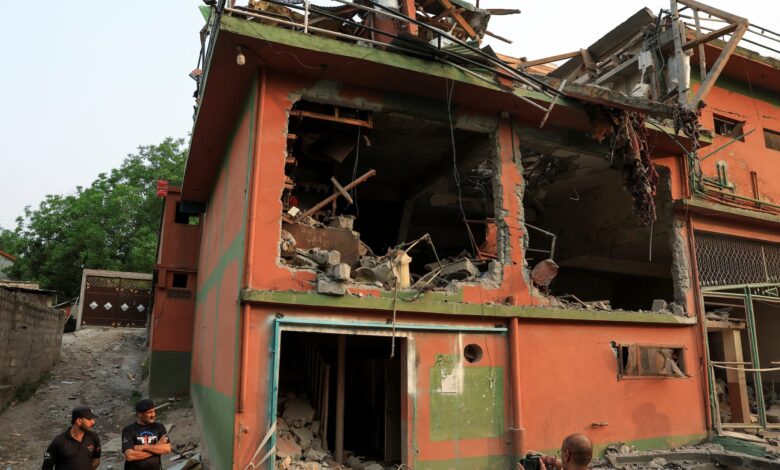
India and Pakistan agreed to a pause in hostilities from 5 pm on Saturday, May 10 — a sudden shift after weeks of simmering tension, cross-border threats and military build-up. Both countries will resume military-level communication on Monday, May 12, when their Directors General of Military Operations (DGMOs) are due to speak.
Follow the latest from the pause in India-Pakistan hostilities here
Behind the calm now settling over the border, Indian military operations over the past week have exposed serious weaknesses in Pakistan’s air defence systems. During Operation Sindoor, Indian forces struck deep inside Pakistan and Pakistan-occupied Kashmir, taking out nine major terror camps linked to Lashkar-e-Taiba, Jaish-e-Mohammed and Hizbul Mujahideen, as well as neutralising notorious terrorists
.
The strikes extended hundreds of kilometres into Pakistani territory, including sensitive targets in Punjab province, an area traditionally seen as well-guarded. Indian Rafale jets equipped with SCALP missiles and HAMMER bombs bypassed or jammed Pakistan’s air defence network and returned without suffering any losses — a clear indicator of both strategic precision and air superiority.
According to Indian defence assessments, these operations were completed in a 23-minute window, during which Pakistani air defence systems failed to mount an effective response. Among the targets hit were locations in Bahawalpur and Muridke, long known as operational hubs for high-profile terrorists. One mission also destroyed Pakistan’s air defence system protecting Lahore.
Also read | Full Text: Defence Ministry briefing after India-Pakistan agree to pause hostilities
India also launched kamikaze drones to neutralise radar and missile batteries, paving the way for deep strikes. In a first, Indian forces managed to damage five major Pakistan Air Force bases — Nur Khan, Rahim Yar Khan, Rafiqui, Murid and Sialkot — during counter-attacks on the night of 9 and 10 May.
These developments point to vulnerabilities in Pakistan’s HQ-9-based air defence grid, which failed to prevent penetration or respond effectively once India initiated its strikes. According to a military source, “India’s posture has been firm and clear. The message has gone through.”
The scale and coordination of the operation — involving the Indian Army, Navy and Air Force — signalled a new level of joint warfare capability. “India has ushered in a new strategic and political military doctrine that thresholds of tolerance, in so far as terror is concerned, a new threshold has been established,” said Air Vice Marshal (Retd.) Kapil Kak.
India’s counteroffensive followed retaliatory drone and missile attacks launched by Pakistan between May 7 and 9, which targeted Indian cities and military installations. These incoming threats were intercepted, and India reported minimal damage and no casualties — in sharp contrast to the destruction inflicted across the border.
Also read: What may have prompted the pause in India-Pakistan hostilities?
In addition to kinetic measures, India also suspended the Indus Waters Treaty, a move with deep strategic consequences. Pakistan relies on the Indus river system for the majority of its agricultural and domestic water needs. The suspension cuts into a vital lifeline, placing further pressure on Islamabad.
Former Ambassador Venu Rajamony said the current ceasefire may have been shaped by international diplomacy. “Both these countries must have played a role behind the scenes, which then led to the call from the Pakistan DGMO and conversation between the two DGMOs,” he said, referring to diplomatic efforts from Saudi Arabia and the US.
Former diplomat Ashok Sajjanhar credited US Senator Marco Rubio for active mediation, adding, “It had become quite clear over the last few days that, notwithstanding the Pakistani bravado, continuing this conflict… was quite untenable.”
What stands out now is not just India’s ability to project military power, but the apparent gaps in Pakistan’s defensive capabilities. With the guns temporarily silent, attention may now turn to what lessons both sides will take from the sudden but hard-won halt in hostilities.
Also read: What is Pakistan’s war stamina? Former Army Deputy Chief weighs in