Reddit’s New Content Moderation & Analytical Features Will Make It Easier to Connect & Contribute

Key Takeaways
- Reddit has launched a few new content tools that will make it easier for users to connect and contribute across the platform.
- These tools will help in finding the right communities to post and ensuring that your content does not violate any guidelines.
- The features are available on both mobile and desktop to users worldwide.

On Thursday, Reddit launched a new set of content moderation and analytical tools that will help create a better experience for its users online and boost engagement.
These tools are designed to help users find communities, contribute new posts, and ensure that they don’t break any community guidelines. This will be especially helpful for new users who might not know where or how to post.
Reddit is dedicated to enhancing user contributions and community interactions, paving the way for innovative experiences. – Rosa Català, Senior Director AI & Machine Learning at Reddit
Quick Glimpse Into Reddit’s New Content Tools
Let’s quickly take a look at the new changes Reddit has made.
Post Check
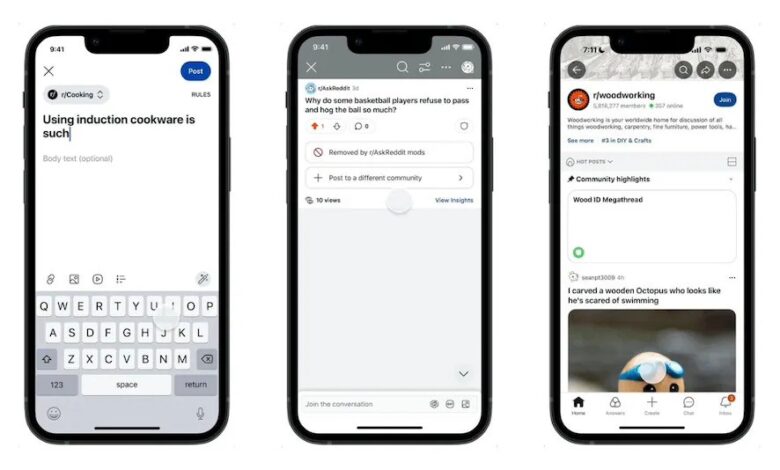
The first feature is “Post Check” which runs an automatic check on content to ensure it’s well within the community guidelines. Sometimes a user might have accidentally broken a rule, which would cause the post to be removed later.
You can access this feature from the little wand icon on the bottom left corner of your screen. The tool will highlight the parts that are against the rules, making it easier for you to fix them.
In case your post is removed because of community guidelines issues, you can now easily post it to a different subreddit. The platform itself will recommend which other communities you can post it on without violating their guidelines.
Another feature addition is “Community Suggestions”. If you are unsure about the community where you should make a post, this feature will be handy.
Once you click on the drop-down menu from the “Pick a Community” option, it will suggest the most relevant communities based on your post’s content. This will help you connect with the right audience and increase engagement on your post.
Sometimes you might not be able to contribute to a community because of some other criteria that you don’t meet. In that case, Reddit will help you understand how you can overcome it.
For example, if you are unable to contribute because of low karma points, this new feature will notify you about the same and tell you that you can increase your karma points by commenting and posting on the platform.
Post Insights
Last but not the least, Reddit has also introduced “Post Insights” which will give you better information on how your post is doing in terms of views, shares, and upvotes. This in turn will help you understand which kind of content does well and which does not.
The best part is that Reddit went for a global rollout. These features are now available to all Reddit users both on mobile and desktop.
These features are the latest in the line of Reddit’s growing number of innovative tools. The platform has been heavily investing in new technology to keep up with its rivals.
In December, it launched a new feature called Reddit Answers (which is still in beta mode and only available in the US), which summarizes community discussions.
Add Techreport to Your Google News Feed
Get the latest updates, trends, and insights delivered straight to your fingertips. Subscribe now!

Vlad is Techreport’s in-house Executive Editor. With over a decade of experience in tech content, he’s passionate about computer hardware, an advocate of online privacy, and strongly believes in the open-source, scarce-money nature of cryptocurrency. Read more
When he’s not working, he’s traveling with his partner and their cat, learning Python, or reading good books. He never owned a PC he did not build. Read less
The Tech Report editorial policy is centered on providing helpful, accurate content that offers real value to our readers. We only work with experienced writers who have specific knowledge in the topics they cover, including latest developments in technology, online privacy, cryptocurrencies, software, and more. Our editorial policy ensures that each topic is researched and curated by our in-house editors. We maintain rigorous journalistic standards, and every article is 100% written by real authors.