How Liam Payne Was Honored on ‘Building the Band’ 9 Months After His Death
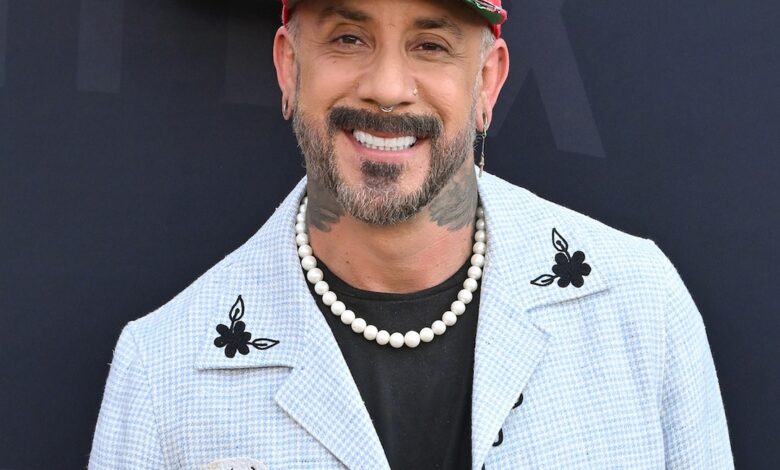
AJ McLean is sober, and he wants it that way.
As the Backstreet Boys member continues on his sobriety journey, which he has openly discussed over the years, he shared he is currently in “the best head space I’ve ever been in my life” after he “got sober again for the last time” in 2021.
“I’m sticking this one out all the way,” AJ told People in an interview published July 10. “It’s a daily thing. But I have finally done what has been suggested amongst the sober community, and my life has flipped in a positive way.”
The Building the Band host—who shares kids Elliot, 12, and Lyric, 8, with ex Rochelle McLean—explained that his present state is the result of a trip to Arizona that he took “for a little departure for myself for mental health.”
“I’m a huge advocate for the mental health community,” he continued. “I wanted to go dig a little deeper into my own existence and really get to the root of why I did the things I did to hurt myself and the ones I loved.”
AJ continued, “I’ve discovered new verbiage, such as boundaries, never really had those. Now I have those, which is a blessing. AJ is a member of a group. He is a persona, but he doesn’t define me as an individual.”
Now, as he noted, “Alexander James is who I am.”
During his sabbatical, the 47-year-old learned he had “zero self-esteem” and suffered from what he called “piece of s–tism,” though he has now moved beyond that negative thinking. As he put it, “I’m still learning, still growing, but if you don’t like me, that’s your loss, because I’m a really good person.”
With his refreshed mindset, AJ is gladly taking in the world around him with a new set of eyes.
Lisa/AFF-USA/Shutterstock
“It is the age-old saying of stopping and smelling the roses,” he told Fox News in an interview published July 10. “I actually physically stop and smell flowers. I have a different confidence—not arrogance, not ego—that I’ve never had. And it’s a confidence that is empowering.”
As AJ explained, “That is because of the work I’ve put in and continue to and will have to do the rest of my days in existence.”
Read on for more stars who have been open about their journeys with addiction and sobriety.
For free and confidential help for those facing mental and/or substance use disorders, call the Substance Abuse and Mental Health Services Administration (SAMHSA) national helpline at 1-800-662-HELP (4357).
Lisa/AFF-USA/Shutterstock
AJ McLean
After the Backstreet Boys member relapsed in 2021, he noted he “got sober again for the last time.”
“I’m sticking this one out all the way,” he told People in July 2025. “It’s a daily thing. But I have finally done what has been suggested amongst the sober community, and my life has flipped in a positive way.”
While AJ acknowledged he is “still learning, still growing,” he’s now confident in who he is.
“I’ve discovered new verbiage, such as boundaries, never really had those,” he continued. “Now I have those, which is a blessing. AJ is a member of a group. He is a persona, but he doesn’t define me as an individual. Alexander James is who I am.”
Stephen Lovekin/Shutterstock
Jason Biggs
In October 2018, the American Pie star announced he was one year sober in a celebratory and encouraging Instagram post.
“I first tried to get sober over 5 years ago, when the weight of my obsession with booze and drugs became too heavy for me to handle,” he wrote at the time. “Turns out this s–t is hard.”
He continued, “After some fits and starts, I’ve managed to put together one year of sobriety. I’m as proud of it as anything in my life. If you’re struggling, know there’s help. Don’t be ashamed. We can do this.”
Years later, he reflected on his journey with addiction and the lengths he went to hide the his struggle.
“I’m going to therapy and ‘working on things’ but meanwhile I’m leaving therapy, having just had a good session, and I’m going to the liquor store and buying a fifth of vodka, drinking it and then driving home,” he said on a March 2024 episode of his wife Jenny Mollen‘s All the Fails podcast. “I knew how to get wasted enough to where I took myself out of the life equation, took myself out of the present, didn’t have to connect in a way that made me feel things.”
He added, “I had it figured out to a T. To not get too drunk where I couldn’t have a conversation with you. I was replacing those bottles in the bar all the time.”
Photo by Jerod Harris/Getty Images
Ashlyn Harris
The two-time FIFA Women’s World Cup champ has been open about her misuse of Adderall while battling injuries during her college soccer career.
“I was getting really heavily addicted to Adderall and misusing it,” she said on a 2025 episode of the Question Everything with Danielle Robay podcast. “I was taking it all the time. I would go days without sleeping. It was wild. I felt like I was gonna give myself a heart attack. I was crushing it. I was snorting it. It was so problematic.”
However, in the midst of her struggle, her college coach Anson Dorrance was there to support her.
“It got really, really dark and I had to make some serious adjustments,” she explained, “and Anson would have me read books. I started reading this book called [Man’s Search] for Meaning and it’s about suffering and reframing it and it changed my life.”
Andrew Chin/Getty Images
Jax Taylor
The Valley star shared his decades-long battle with drugs in March 2025 after going to rehab.
“I am coming out that I’m an addict,” Jax shared during the March 4 episode of Bravo’s Hot Mic podcast. “I have substance issues, primarily with cocaine. It’s hard to say out loud.”
“I’ve been dealing with this on and off since I was 23 and now I’m 45,” he continued. “There was times where I would stop doing it but then there were times where I’d go heavy on it.”
Jax also gave up drinking, explaining, “I don’t necessarily think I have an alcohol problem, but the two go hand in hand. I can’t do cocaine without drinking. So, I just gave up both. I’m proud to say I’m 82, 83 days sober right now, which is the longest I’ve ever gone in my life without either.”
Nina Westervelt/Variety via Getty Images
Tom Holland
The Spider-Man: No Way Home star stopped drinking alcohol in 2022 after feeling “enslaved” to the drink. “I was definitely addicted to alcohol, not shying away from that at all,” Holland recalled on the On Purpose with Jay Shetty podcast. “I think that anyone that has a beer everyday has probably got a little bit of a problem.”
“And then you would just reach that moment where you’re like ‘Wow, I shouldn’t have had that last beer,'” the actor continued. “And you wake up the next day and you have a terrible headache.”
Since making the lifestyle change, Holland noticed he “could sleep better” and “handle problems better.”
“Things that would go wrong on set that would normally set me off, I could take in my stride,” he shared. “I had so much such better mental clarity. I felt healthier. I felt fitter.”
Mike Coppola/Getty Images for the American Museum of Natural History
Alec Baldwin
The star of Hunt for Red October does not often speak to his sobriety journey, which began almost forty years ago.
“I don’t discuss this a lot,” he said during a May 2024 podcast appearance. “I discuss it every now and then when it makes sense. I’m 39 years sober. I got sober Feb. 23, 1985.”
Speaking about his life after moving from New York City to Los Angeles in 1983, Alec explained, “I had a white-hot problem every day for two years. I think I snorted a line of cocaine from here to Saturn. We took it back home. I mean, cocaine was like coffee back then. Everybody was doing it all day long.”
And after quitting the drug, he soon turned to alcohol—only to also quit that dependency.
Today, he relies on the city around him.
“New York relaxes me,” he shared of his home. “I walk around and I see aspects of it that I’ve never seen before. I’ll look at a building and I’ll go, ‘My God, I never noticed that about that building, those doors.’ I have lunches and coffee and my friends.”
Cindy Ord/Getty Images
Anne Hathaway
The Princess Diaries alum shared in April 2024 that she is more than five years sober. As she told the New York Times, “That feels like a milestone to me.”
Her reasoning was clear. “I knew deep down it wasn’t for me,” she shared. “And it just felt so extreme to have to say, ‘But none?’ But none. If you’re allergic to something or have an anaphylactic reaction to something, you don’t argue with it. So I stopped arguing with it.”
And she’s happy she made that decision. “My personal experience with it is that everything is better,” she continued. “For me, it was wallowing fuel. And I don’t like to wallow.”
David Livingston/Getty Images
Demi Moore
While accepting the 2018 Woman of the Year Award by the Peggy Albrecht Friendly House, a residential program for women recovering from substance and alcohol abuse, Moore spoke about the “self-destructive path” that nearly derailed her career.
“I feel like there’s a defining moments in our lives that shape who we are and the direction we go and early in my career, I was spiraling down a path of real self-destruction and no matter what successes I had, I just never felt good enough,” the star recalled. “I had absolutely no value for myself and this self-destructive path, it very quickly brought me to a real crisis point and it wasn’t clear at the time the reason. Maybe it was divine intervention.”
Moore, who sought treatment in 2012, thanked two unnamed people she “barely knew” for delivering something of an ultimatum to her to turn her life around. “Unless I was dead, I better show up,” she quipped, adding that she was given “a chance to redirect the course of my life before I destroyed everything.”
“Clearly they saw more of me than I saw of myself,” Moore noted. “And I’m so grateful because without that opportunity, without their believing me, I wouldn’t be standing here today.”
Tiktok
Noah Cyrus
Cyrus shared in 2022 that she’s been in recovery for her Xanax addiction since 2020. “It gave me so much structure in the time that I really needed structure, because I didn’t want to just be sitting around and stirring in my brain,” she told Rolling Stone. “It gave me hope.”
The singer added, “Once I felt that it was possible to silence things out for a second and numb your pain, it was over.”
She said her friends at the time “kind of cosigned” her drug use and “it just kind of becomes this dark pit, bottomless pit.” But, during the pandemic, Cyrus said she was noticing challenges and felt she wasn’t emotionally present. “I was completely nodding off and falling asleep,” she recalled. “And unable to keep my head up or keep my eyes open, because I was so far gone.”
She eventually sought help and noted that “it took some time to get on my own two feet.”
Joe Pugliese/NBCU Photo Bank/NBCUniversal via Getty Images
Dax Shepard
The Parenthood alum was sober for 16 years before relapsing in 2020 by taking Vicodin after a motorcycle accident.
“For the last eight weeks maybe, I don’t really know…I’m on them all day,” he said on his Armchair Expert podcast. “And I’m allowed to be on them at some dosage because I have a prescription and then I’m also augmenting that.”
“And I hate it,” he continued. “And I’m lying to other people. And I know I have to quit. But my tolerance is going up so quickly that I’m now in a situation where I’m taking, you know, eight 30s a day, and I know that’s an amount that’s going to result in a pretty bad withdrawal. And I start getting really scared, and I’m starting to feel really lonely. And I just have this enormous secret.”
Randy Shropshire/Getty Images for Universal Studios Hollywood
Jamie Lee Curtis
In 2018, the Halloween star got very candid about her 10-year addiction to opiates, which began in the late ’80s after a minor plastic surgery “for my hereditary puffy eyes.” The reslt was a prescription that changed her life. “I had a 10-year run, stealing, conniving,” she told People. “No one knew. No one.”
When her sister visited her in the summer of 1998 and brought along prescribed painkillers for a rib injury, Curtis said she hit her rock bottom. “I knew she had them in her suitcase in our guest room closet,” she told the publication, crying at the memory. “I basically took all her opiates. When she was leaving I knew she would pack her suitcase and find her pills missing. I knew I had to acknowledge to her what I had done, and so I wrote her a note and left it on her suitcase. I came home that day, and she put her arms around me and told me she loved me and she was concerned about me and she was unwilling to watch me kill myself.”
She attended her first meeting on Feb. 3, 1999, the same day she revealed her struggle to her filmmaker husband Christopher Guest. “He was incredulous that he’d never noticed,” Curtis said, adding that she’s been sober ever since.
Paul Morigi/Getty Images
Drew Barrymore
Barrymore, who previously went to rehab for alcohol and drug addiction, shared in 2021 that she was marking a big milestone in her journey. “I’m just going to say something for the first time in a long time: I have not had a drink of alcohol in two and a half years,” she said on CBS Mornings. “And it was something that I realized just did not serve me in my life.”
She added, “It’s so funny. When we reveal ourselves and our truths and the things we’ve worked so hard for, it’s so liberating and vulnerable all at the same time.”
Barrymore later explained to the Los Angeles Times that she doesn’t use the “sober” label because she doesn’t want people to think she’s “some perfect Puritan.”
“I kept thinking, ‘I’ll master this. I’ll figure it out,'” she said in 2023. “And finally, I just realized: ‘You’ve never mastered this, and you never will.'”
Jesse Grant/Getty Images for Disney
Bradley Cooper
The A Star Is Born actor struggled with a cocaine addiction during the early aughts before friend Will Arnett stepped in and confronted him out about his behavior.
“That was the first time I ever realized I had a problem with drugs and alcohol,” Cooper recalled during a 2022 appearance on the Smartless podcast. “I’ll just never forget it.”
Crediting Arnett as “the reason” he went sober, Cooper added, “He took that risk of having a hard conversation with me that put me on a path of deciding to change my life.”
Stephane Cardinale – Corbis/Corbis via Getty Images
Brad Pitt
The Fight Club star spent years struggling with alcohol before Cooper helped him get sober. “I got sober because of this guy,” he told the audience at the 2020 National Board of Review Annual Awards after Cooper presented him with a trophy. “And every day’s been happier ever since.”
Rebecca Sapp/Getty Images for SBIFF
Ryan Phillippe
In September 2023, the Cruel Intentions alum shared on Instagram that this was “the longest I’ve gone since I was a teen without some kind of nicotine or marijuana in my system (among other things).”
“Feeling thankful for the freedom that comes with breaking addictions and dependency on substance,” he added. “Sobriety, clarity, and spiritual connectedness feels real good.”
Santiago Felipe/Getty Images
Demi Lovato
After publicly celebrating six years of sobriety on tour in 2018, the singer stunned fans later that same year with the release of the confessional single “Sober,” which revealed that she had relapsed.
“Mama, I’m so sorry I’m not sober anymore / And Daddy please forgive me for the drinks spilled on the floor / To the ones who never left me / We’ve been down this road before I’m so sorry, I’m not sober anymore,” she sang.
A month later, Lovato was hospitalized for a near-fatal overdose.
“I have always been transparent about my journey with addiction,” she wrote on Instagram two weeks later. “What I’ve learned is that this illness is not something that disappears or fades with time. It is something I must continue to overcome and have not done yet…I now need time to heal and focus on my sobriety and road to recovery. The love you have all shown me will never be forgotten and I look forward to the day where I can say I came out on the other side. I will keep fighting.”
Jada Pinkett Smith
In 2018, she recalled battling her addictions to sex and alcohol. “My sort of addictions jump. They jump around. When I was younger, I definitely think I had a sex addiction of some kind, yes, that everything could be fixed by sex,” she said, before sharing about the time she realized she’d developed a troubling drinking problem.
“I remember reaching a rock bottom that time I was in the house by myself and I had those two bottles of wine and was going for the third bottle,” she said. “And I was like, ‘Now hold up. You’re in the this house by yourself going onto your third bottle of wine? You might have a problem.'”
“So I went cold turkey. That’s the thing about me: I can go cold turkey. I am a binger, and I always have to watch myself and I can just get obsessed with things,” she continued. “It’s not what you’re doing but how you’re with it. Why you’re doing it. It’s the behavior that’s attached to it because if you want to have a lot of sex, that’s great, but why are you having all that sex? That’s what you’ve got to look at.”
Greg Doherty/Getty Images
AJ Mclean
The Backstreet Boys member tried drugs for the first time before filming the music video for 2000’s “The Call,” telling Good Morning America years later that he “was off the walls” during the shoot. He got sober in 2021 and saw numerous positive benefits just one year later, including losing 32 pounds in seven months by cutting out alcohol and fast food.
“Drinking caused weight gain,” he told Today in September 2022, “but it also weighed down my mental state.”
Cindy Ord/Getty Images for SiriusXM
Bow Wow
After the sudden death of Mac Miller, the rapper—born Shad Moss—took to Twitter to let his fans know that he’d once struggled with a cough syrup addiction.
“To the youth- Stop with these dumb ass drugs,” he began his series of tweets. “Im going to let something out. When me and Omarion worked on FACE OFF album. I was high off lean everyday! When yall saw me on BET going off on Torae i was high off lean. My attitude everything changed. My fans started to…Turn on me my family too. I never promoted lean in my songs. The whole time i was on the UCP tour with Chris [Brown] I WAS SIPPING 4’s atleast 7 times a day. I was addicted until our show in Cincinnati.. i came off stg and passed out woke up in the hospital i was having withdraws.”
“I never felt a pain like that ever,” Bow Wow continued. “It was summer but i was walking round with 3 hoodies on because i was so cold. I missed the chicago show of that tour baltimore show BECAUSE I WAS F–KING HIGH AND SICK!!!! that s–t is not cool and i was doing it to be cool! Kick that s–t! Be a good son or daughter. Be the best you. Ima start being more vocal. We gotta save the youth from going out early. Parents watch your kids. Explain to them. We want yall to live man. I almost died f–king with syrup.”
“To this day im affected my stomach will…Never be the same and it hasnt been. DRUG FREE IS THE WAY TO BE! smarten up tighten up out here,” he told his fans. “We cant lose no more of you. Not one! I love all yall. The young artist all the kids around the world.. dont follow a trend. Break the cycle. PEACE.”
Ricky Vigil M/Justin E Palmer/GC Images
Lily Allen
With the dual releases of her fourth studio album No Shame and memoir My Thoughts Exactly, the singer spent much of 2018 getting brutally honest about the height of her addition problems. According to Allen, she was abusing cocaine and drinking to the point of being “parisitically drunk. Ultimately, Gwyneth Paltrow and Chris Martin staged an intervention after she accidentally headbutted Orlando Bloom at Kate Hudson‘s Halloween party and knocked herself out.
She told The Guardian, “Nothing seemed to reach or satisfy me. I remember waking up one morning in those dark days thinking, ‘Maybe it’s time for heroin, because nothing else is working.'”
Paul Archuleta/Getty Images
Dennis Quaid
The Parent Trap actor battled a cocaine addiction throughout the ’80s that sent him to rehab in 1990. As he later explained on Today, he grew up in the ’60s and ’70s when “there was a completely different attitude” towards the drug.
“It was even in some movie budgets. I was basically doing cocaine pretty much on a daily basis during the ’80s,” he admitted in 2018. “I spent many, many a night screaming at God to ‘Please take this away from me and I’ll never do it again, cause I’ve only got an hour before I have to be at work.’ Then at 4 o’clock in the afternoon I’d go, ‘Oh it’s not so bad.'”
“I had what I call a white light experience where I saw myself either dead or losing everything that meant anything to me,” he continued. He had to sit down then-fiancée Meg Ryan and explain what was going on. Then, he sought help. “That was the end of the love affair with me and cocaine.”
MARTIN BUREAU/AFP/Getty Images
Ryan Lochte
After an incident in Newport Beach where the Olympic swimmer tried to kick in his own hotel room door, Lochte made the decision to seek treatment in 2018. “Ryan has been battling from alcohol addiction for many years and unfortunately it has become a destructive pattern for him,” his rep told E! News in a statement. “He has acknowledged that he needs professional assistance to overcome his problem and will be getting help immediately.”
“Ryan knows that conquering this disease now is a must for him to avoid making future poor decisions, to be the best husband and father he can be, and if he wants to achieve his goal to return to dominance in the pool in his 5th Olympics in Tokyo in 2020,” the statement concluded.
Vivien Killilea/Getty Images for Alex’s Lemonade Stand Foundation
Jason Ritter
Although the Parenthood alum knows that “one of the things that you’re not supposed to do is get sober for somebody else,” his relationship with now-wife Melanie Lynskey was a major reason that led him to swearing off alcohol.
“At a point, I knew how amazing she was and I thought she would be incredible for someone who deserved her,” he explained during a March 2023 appearance on The Drew Barrymore Show, “and I didn’t feel like I was that person. I felt a little bit too crazy.”
However, as Ritter noted to E! News, he now sees that sobriety is ultimately a personal choice.
“It was easier for me to say that I’m doing it for her because, at that time, I didn’t feel like I was sort of worth much,” he recalled of the early days of their relationship. “I didn’t care as much about hurting myself as I did about hurting her. So, initially it was easier for me to say, ‘I’m doing this for her.’ And now, I’m doing it for myself.”
Suzanne Cordeiro/Corbis via Getty Images
Brantley Gilbert
The country star has been sober for nearly a decade, but it was a hard-fought road getting there. His addiction to alcohol and pain pills began soon after graduating from high school and didn’t abate when his career began to take off. He kept a black leather laptop bag filled with bottles of Jagermeister or vodka “at arm’s reach at all times,” he told previously revealed to People, adding that throughout the day, “every hour and a half to two hours it’d be time to get two or three good pulls on the bottle. And every three or four hours it’s time for a pill or two.”
And it had no effect on his success. “It wasn’t like I was stumbling around all day,” he admitted. “I was fully functioning — I wrote more songs then than I do now. That was the scary part.”
In late 2011, he was hospitalized with pancreatitis and was told that if he didn’t stop drinking, he wouldn’t see his next birthday. “I still put it off and was trying to slow down on my own, like, ‘All right I’m only gonna let myself take two pills today. I’m only gonna drink this much of my bottle and make a mark on the bottle,'” he recalled. “And it would work a couple days—and then somebody throws a party.”
He eventually sought help, entering rehab on Dec. 18, 2011. “I got to the point where I knew it was something I couldn’t do on my own,” Gilbert said. “Pissed me off to no end and embarrassed me. I’m a pretty strong-willed person but that was the one thing in my life that I couldn’t get to stick.”
For the latest breaking news updates, click here to download the E! News App