With the DESTINY-Breast09 trial, which was presented at this year’s American Society of Clinical Oncology (ASCO) annual meeting, suggesting a shift in first-line treatment for HER2-positive metastatic breast cancer, questions remain about whether trastuzumab deruxtecan (T-DXd; Enhertu) can follow the same induction-maintenance model as the standard of care of a taxane plus trastuzumab (Herceptin) and pertuzumab (Perjeta).
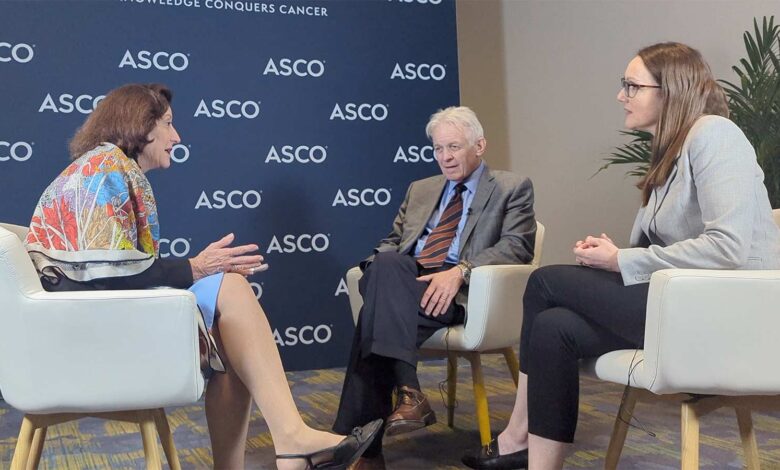
MedPage Today brought together three expert leaders in the field: Moderator Hope S. Rugo, MD, of the City of Hope Comprehensive Cancer Center in Duarte, California, is joined by William J. Gradishar, MD, of Northwestern University Feinberg School of Medicine in Chicago, and Laura Huppert, MD, of the University of California San Francisco, for a virtual roundtable discussion.
In this second segment, Rugo raises key concerns about long-term tolerability and highlights ongoing studies that may help define future maintenance approaches.
Watch the entire roundtable series here.
Following is a transcript of their remarks:
Rugo: I think that the whole idea of having a better response and a longer duration of disease control is very appealing with the drug that we already like. But I think that continuing it long term is an issue.
There’s a number of maintenance studies, actually, we saw the great results from PATINA at San Antonio in 2024, but there’s also two other trials going on using inavolisib [Itovebi] in patients with [trastuzumab and pertuzumab] and patients who have PIK3CA mutations, and then using tucatinib [Tukysa] overall as a maintenance strategy as well along with [trastuzumab and pertuzumab]. So it’s going to be interesting. Could we then manipulate those maintenance strategies into a post-induction T-DXd-like approach?
And so there’s clearly a lot of questions, and I think we need the more detailed data analysis from D-B09 with the how long do people stay on before they went off, which taxane did they get? On and on. What was the first site of disease progression? You mentioned brain, also I think really an important endpoint, because if we could delay brain metastases or prevent them, it would be pretty amazing, I think.
Gradishar: I was just going to emphasize that a lot of this is what Angie DeMichele [MD, of the Abramson Cancer Center at the University of Pennsylvania in Philadelphia] was highlighting, this long journey of metastatic disease. And although we have a number of different strategies which we’ve highlighted, including maintenance endocrine therapy, adding a CDK4/6 inhibitor, some of the other trials, we always have to keep in the back of our mind that we want to mitigate side effects as much as we can. And some of the drugs that we’re adding in lieu of continuing, say T-DXd, are now without side effects.
So we’re going to have to look at the totality of the quality of life that patients have as they go through this. We want to extend survival, but we want that survival to be high quality.
Rugo: Yeah, absolutely. And that’s such an incredibly important point.