As kids, friendship often felt like an accident of proximity: You bonded with the girl you sat next to in math class, the neighbor down the street, and the soccer teammates you saw on Wednesday afternoons. But “it’s much harder to meet new people the older we get,” Suzanne Degges-White, PhD, LCPC, chair of the department of counseling and higher education at Northern Illinois University College of Education, tells SELF. “And when we buy into the belief that we should all easily be able to make friends, struggling to do so can seem embarrassing.”
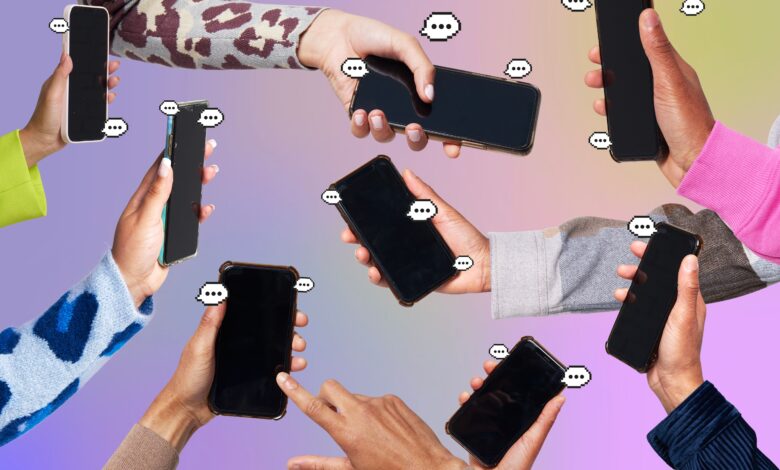
This helps explain the rise of a modern-day solution: friendship apps. Much like dating apps, these platforms promise to make finding your next platonic go-to a little easier. Perhaps the most well-known one is Bumble BFF, which used to exist within Bumble’s dating app but recently relaunched as a standalone platform. Other popular options include Meetup, Yubo, and Nextdoor—along with more localized services like 222 and RealRoots, which match small groups of people for organized, real-life meetups.
Clearly, there’s demand for something that can help us meet new people. But if the technology is here—and our desire is real—why, then, is making one new, true friend in adulthood still so difficult? The answer, experts say, is more complicated than any algorithm.
The benefits of friendship apps
For apps like Bumble BFF, their biggest strength is simple: “They give you access to people who are also open to developing some sort of relationship,” Jeffrey Hall, PhD, professor of communication studies at the University of Kansas and director of the Relationships and Technology Lab, tells SELF. That clarity can be a game-changer, considering most people have no way of knowing if someone is looking to make new friends—or if they’re just being polite. (That uncertainty, Dr. Hall says, is what keeps most folks from branching out in the first place.)
Many apps even go a step further, matching strangers based on shared interests instead of just age or location. “When there’s something that brings you joy—like running, cooking, watching a certain type of show—it removes the stress of having to ‘make conversation’ with new people since you’re able to immerse yourself in an activity instead,” Dr. Degges-White adds.
The major challenges of finding friends online
Friendship apps are still finding their footing, and much of the stigma—and questions around their success—comes down to how new they still are.
“You have to remember that societally, we voiced a similar set of concerns back when online dating apps and sites became popular,” Dr. Hall points out. “That only people who were desperate or unsuccessful were relying on these platforms.”
But even if the cultural hesitation fades, there are a few hurdles unique to building platonic bonds online. Here are some of the biggest challenges experts have been seeing.
1. There aren’t obvious benchmarks in friendship.
According to Jess Carbino, PhD, former sociologist for Tinder and Bumble, “there are clear indicators to delineate the degree of commitment in romantic relationships.” Those milestones usually look like going from making plans twice a week to having “the talk” about exclusivity to eventually defining the relationship.
“However, no such marker exists in friendships,” Dr. Carbino tells SELF. Even your closest companions don’t owe you exclusivity—they can have other friends or go weeks without seeing you, neither of which means your connection is weak. But without those clear goal posts we see in modern dating, Dr. Carbino says “it’s easy for people to question the degree to which their bond is ‘successful.’”
2. Friendship takes time—and not everyone makes it a priority.
Sure, apps can help you meet someone. But turning that initial coffee or yoga class hang into an unforced, lasting friendship? That takes time—and, as every expert we spoke with agrees—consistent effort.
“Friendships develop through a process of lots and lots of small interactions that lead to better, stronger, more intimate ones,” Dr. Hall explains. Yet unlike romantic relationships (which most people naturally weave into their daily routines), our platonic ones rarely get that same kind of priority. Careers, partners, kids, and other obligations easily push these early-stage connections to the backburner—sometimes, before they’ve even had the chance to fully develop.
3. Expecting a ‘ride-or-die’ keeps friendships from forming.
From behind a screen, it’s all too easy to judge someone (especially if you’re chasing that elusive “Next Best Friend”). Maybe you swipe past a profile because their selfie looks “off,” or you ignore their DM because their bio doesn’t scream soulmate potential.
What we often forget, though, is that many friendships don’t follow an all-or-nothing script—and expecting them to can set you up for disappointment. “There are a variety of depths and types of friendships,” Dr. Degges-White points out. Some people you meet will become your everyday confidantes. Others—more often than not—might only be the people you see at the dog park, book club, or Sunday morning yoga class, and that’s okay. Being open to those lighter, situational connections not only takes the pressure off, Dr. Degges-White says, but it can also allow those bonds to deepen in more natural ways.
How to make the most out of friendship apps
Just as going on Hinge with a “meet my future spouse or bust” mindset is a recipe for disappointment, diving into friendship apps to find a lifelong companion can set you up for the same letdown.
Instead of seeing these platforms as guaranteed shortcuts, Dr. Hall recommends reframing them as “introduction services” to others who are in spaces you already enjoy. The most organic bonds (and the ones you’re most likely to maintain) tend to grow in environments where you’re comfortable and engaged, he points out, whether that’s a pottery studio, soccer league, or neighborhood supper club you’ve been eager to explore.
It’s also worth remembering that an app, no matter how sophisticated, can only take you so far. At some point you have to do the human part, which includes things like following up on a message, organizing a second hangout, or vulnerably opening up to actually allow someone to get to know you. Because the thing about friendships is that they’re rarely instant—unlike the cinematic spark or “love at first sight” in romance movies. Instead, they develop slowly, almost invisibly, until one day you realize the stranger you met for casual coffee is the one you’re texting memes to at midnight. And that’s the part no algorithm can manufacture or predict.
Related:
- 16 People Who Actually Made New Friends in Adulthood Share How They Did It
- Everyone Needs an ‘Errand Friend.’ Here’s Why.
- My Friend Cut Me Off. How Can I Get Them to Forgive Me?
Get more of SELF’s great friendship content delivered right to your inbox—for free.