Georgia showed signs of fracture against a Kentucky team that South Carolina easily handled just a week ago. That’s one perspective.
Kentucky demonstrated the strength of the SEC by answering the call against the No. 1 team in the sport and the presumptive favorite to win what is the deepest, most competitive league in the sport. That’s the second view.
When South Carolina has LSU on the ropes until standout QB LaNorris Sellers is forced to leave the game in the second half due to injury, it’s the second view that feels true. When Alabama puts up the highest point total against Wisconsin at Camp Randall since 2008, it’s the second view that feels true.
When Texas QB Arch Manning comes off the bench and becomes just the third player over the last 20 years to rush for a 65-yard touchdown and throw a 65-yard touchdown in a rout of UTSA, it’s the second view that feels true.
In Week 3 of the 2024 college football season, the SEC proved its slogan to be true: It just means more.
With that, here are my top 25 rankings following a thrilling Week 3:
1. Georgia (3-0)
Week 3 result: Defeated Kentucky, 13-12
The top-ranked Bulldogs had their hands full with Kentucky all night. Kirby Smart admitted that his team had a lot to clean up after nine total penalties and a lackluster offensive performance that resulted in only 262 total yards.
Georgia has a bye next weekend before traveling to Tuscaloosa to take on Alabama in an SEC showdown on Sept. 28.
2. Texas (3-0)
Week 3 result: Defeated UTSA, 56-7
Quinn Ewers left the game in the first half with what Longhorns coach Steve Sarkisian called a strained abdomen. Ewers has not yet played an entire season without missing a game due to injury.
Enter redshirt freshman Arch Manning, who continued to live up to his billing as the No. 1 player in the 2023 recruiting class. He completed 9 of 12 passes for 223 yards and four touchdowns, while also adding another score on the ground.
3. Ohio State (2-0)
Week 3 result: Idle
4. Tennessee (3-0)
Week 3 result: Defeated Kent State, 71-0
Nico Iamaleava has been one of the hottest names in the sport through the first three weeks of the season, but it was the Vols’ run game that stole the show on Saturday. Tennessee totaled an eye-popping 456 yards and six scores on the ground in a dominant win over Kent State.
The Vols have outscored their opponents 191-13 through the first three weeks of the season. It gets real for Josh Heupel’s team next weekend when they travel to Norman for a matchup with SEC newcomer Oklahoma.
5. USC (2-0)
Week 3 result: Idle
6. Ole Miss (3-0)
Week 3 result: Defeated Wake Forest, 40-6
Jaxson Dart looks like one of, if not the top quarterback in college football right now. He looked impressive in his first two weeks, but that was against Furman and Middle Tennessee. On Saturday, against a Power 4 opponent, Dart completed 26 of 34 passes for 377 yards and two touchdowns. He also added a 13-yard rushing TD late in the third quarter where he bulldozed over three Wake Forest defenders and into the end zone.
7. Alabama (3-0)
Week 3 result: Defeated Wisconsin, 42-10
Kalen DeBoer’s team put up 42 points against Wisconsin, which is the highest total scored by an opponent at Camp Randall since 2008. With his third consecutive game with two passing and two rushing TDs, Jalen Milroe enters the Heisman conversation in earnest.
The Tide have a bye next week before a Week 5 matchup against a Georgia team that began sluggishly against Kentucky. With a win, Milroe would become the front-runner for the stiff-arm trophy.
8. Penn State (2-0)
Week 3 result: Idle
9. Oregon (3-0)
Week 3 result: Defeated Oregon State, 49-14
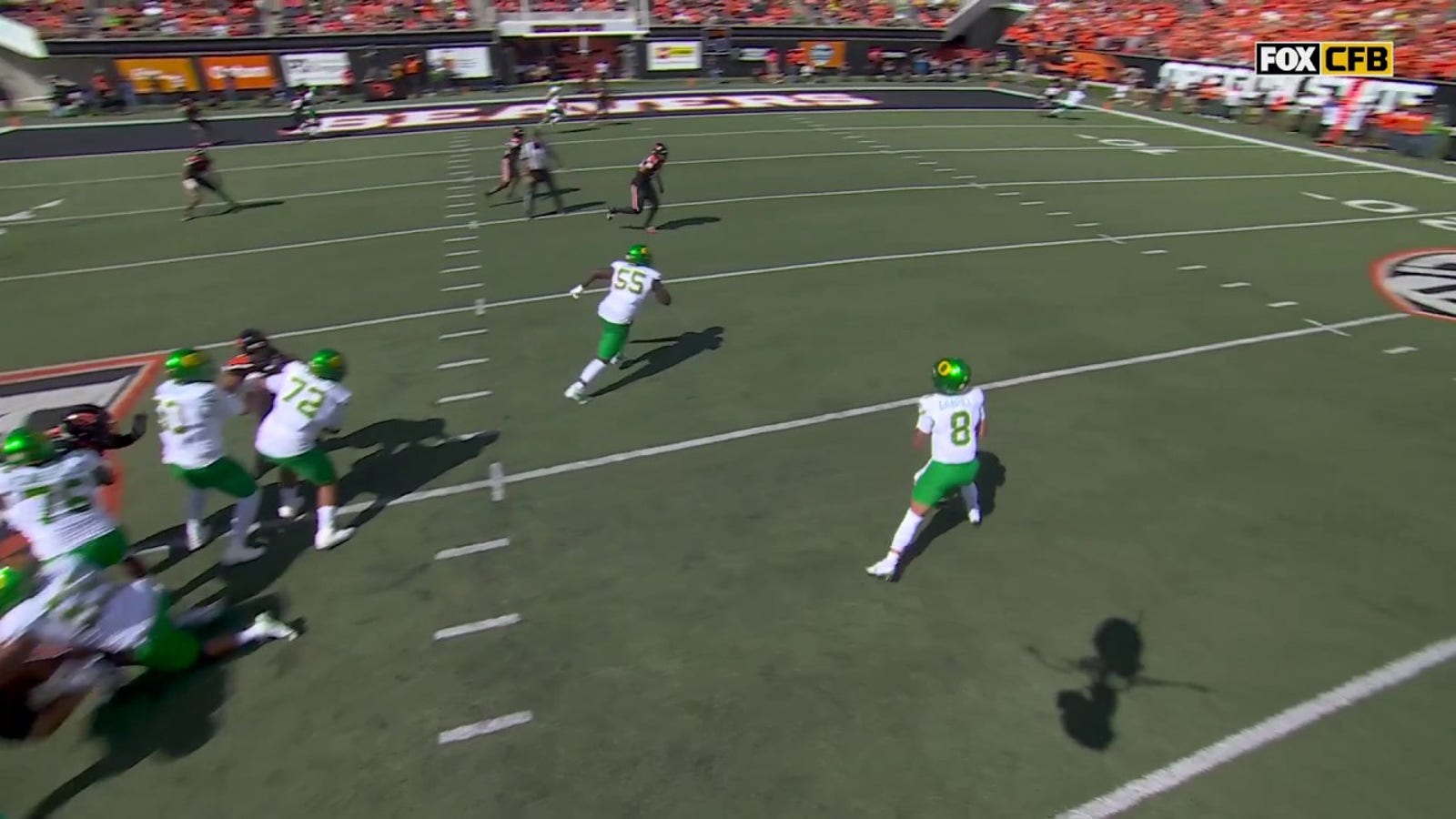
For the first time all year, the Ducks showed the kind of offensive and defensive prowess we expected to see from them this season. Quarterback Dillon Gabriel completed 20 of 24 passes for 291 yards, while Oregon put up 546 yards of total offense in the victory against their in-state rival.
Dillon Gabriel throws a DIME for a 20-yard passing TD as Oregon extends lead over Oregon State
10. Miami (Fla.) (3-0)
Week 3 result: Defeated Ball State, 62-0
Cam Ward threw for 346 yards and five touchdowns in the win. The Heisman contender has passed for at least 300 yards and thrown for at least three TDs in every game he’s played this season. The Hurricanes put up 750 yards — including 507 through the air — on the Cardinals to cap their non-conference slate.
11. Missouri (3-0)
Week 3 result: Defeated Boston College, 27-21
Missouri QB Brady Cook completed 21-of-30 for 264 yards and a touchdown in a comeback win, the Tigers‘ first against a Power 4 program this season.
After trailing 14-3 early in the second quarter, Mizzou went on to score 24 straight in the win.
12. Oklahoma State (3-0)
Week 3 result: Defeated Tulsa, 45-10
Quarterback Alan Bowman threw for 396 yards with five touchdowns and one pick in a win over the private Presbyterian program in Tulsa.
13. Utah (3-0)
Week 3 result: Defeated Utah State, 38-21
Despite playing without Cam Rising, the Utes handled their in-state rival and former starting QB Bryson Barnes. Quarterback Isaac Wilson completed 20 of 33 passes for 239 yards with three touchdowns and an interception.

14. Clemson (1-1)
Week 3 result: Idle
15. Michigan (2-1)
Week 3 result: Defeated Arkansas State, 28-18
Davis Warren completed every pass he threw. The only issue was, three of those went to the other team. Warren finished 11-of-14, with all three of those incompletions resulting in interceptions.
Running back Kalel Mullings is the best offensive weapon the Wolverines have right now. He rushed for 153 yards on just 15 rushes. Mullings rushed for just 195 yards all last season.
16. LSU (2-1)
Week 3 result: Defeated South Carolina, 36-33
LSU fought back to earn a win against the Gamecocks, but this team looked lost against a one-dimensional South Carolina offense. LSU gave up 243 yards on the ground after giving up 150 to Nicholls State last week.
Garrett Nussmeier threw for 285 yards with two TDs and a pick in the win. He is averaging 298.3 passing yards per game this season.
17. Kansas State (3-0)
Week 3 result: Defeated Arizona, 31-7
Avery Johnson looks like the real deal. The talented sophomore quarterback threw for 156 yards and two touchdowns, while also adding 110 yards on the ground in a non-conference rout of their Big 12 foe.
18. Oklahoma (3-0)
Week 3 result: Defeated Tulane, 34-19
Oklahoma’s defense has not allowed more than 14 points to an opponent all season. However, with Tennessee on deck, the strength of the OU’s 2024 program will be tested by one of the class programs in the SEC in its first-ever game in their new conference.
19. Louisville (2-0)
Week 3 result: Idle
20: Syracuse (2-0)
Week 3 result: Idle
21. Illinois (3-0)
Week 3 result: Defeated Central Michigan, 30-9
The Illini are 3-0 with a win against a ranked opponent and will face an undefeated Nebraska team in Lincoln to open Big Ten play on Saturday.
Illinois’ defense has forced nine turnovers in three games.
22. Iowa State (2-0)
Week 3 result: Idle
23. Nebraska (3-0)
Week 3 result: Defeated Northern Iowa, 34-3
Dylan Raiola and the Cornhuskers scored on five of their first six possessions of this game. Raiola finished with 247 yards and two touchdowns as Nebraska is off to its best start since 2016.
24. Notre Dame (2-1)
Week 3 result: Defeated Purdue, 66-7
The Irish responded to their embarrassing loss at their house last week by embarrassing the Boilermakers at theirs. Notre Dame rushed for six touchdowns and 362 yards in the intrastate affair. The Irish totaled 278 of those rushing yards in the first half.
25. UNLV (3-0)
Week 3 result: Defeated Kansas, 23-20
Kylin James scored on fourth-and-goal from the 1-yard line with 1:51 remaining to get the Rebels a memorable win over Kansas on Friday night. UNLV joins San Jose State as the only undefeated teams out of the Mountain West Conference through the first three weeks of the season.
RJ Young is a national college football writer and analyst for FOX Sports and the host of the podcast “The Number One College Football Show.” Follow him at @RJ_Young and subscribe to “The RJ Young Show” on YouTube.
[Want great stories delivered right to your inbox? Create or log in to your FOX Sports account, follow leagues, teams and players to receive a personalized newsletter daily.]

Get more from College Football Follow your favorites to get information about games, news and more